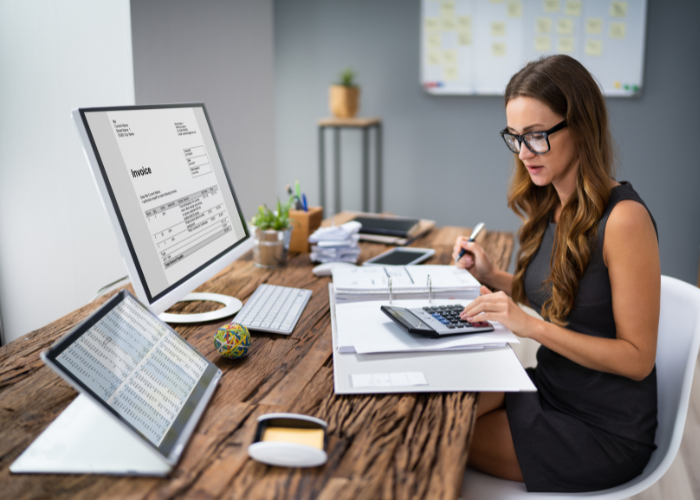
“Blessed digitization,” more and more financial executives exclaim. With the transformation of the business landscape,accounts payable e-invoicinghas become an essential tool for financial leaders of large companies seeking to improve their accounting processes. Nevertheless, there are still those who fear diving into this new and agile digital ecosystem, even thoughe-invoicingis advancing by leaps and bounds worldwide. To help you better understand the entire accounts payable e-invoicing process, we detail it in depth here and offer strategies for maintaining an organized and detailed record of your company’s accounting processes.
What is accounts payable e-invoicing?
First of all, let’s understand the concept we’re going to discuss. Accounts payable e-invoicing isthe digital reception, validation, and storage of invoices that a company receives from its suppliers.Therefore, it is a process that automates manual tasks, reduces errors, and ensures compliance with tax and commercial regulations.
To be more specific, the mainbenefits of e-invoicing in general are:
- Error Reduction. Minimizes human errors by automating data entry.
- Time Savings. Accelerates the payment process by reducing manual interventions.
- Regulatory Compliance. Ensures that all invoices comply with legal requirements,such as the use of FACE Electronic Invoice.
- Improved Cash Flow Management. Allows for more accurate planning and better control over your business finances.
However, depending on your company and industry, the benefits are even more extensive, as it offers specific advantages that go beyond.
The Accounts Payable E-Invoicing Process
In turn, it is a process that has a “step-by-step and primarily follows the five chronological stepsthat we explain below.
1. Receipt
You can receive electronic invoices in several ways. For example,via emails, supplier portals, or EDI systems (Electronic Data Interchange). Furthermore, invoices must be in a standard format, such as XML or PDF.
However, given that electronic invoicing will be mandatoryfor all businesses sooner rather than later,it’s best to adapt to legal requirementswith efficient invoicing software like easyap’s.
2. Validation
Once you have received the invoice electronically, you must validate it. That is, ensure that it contains all the necessary invoice information and complies with regulations.This validation will typically include verification of:
- Supplier identity
- Items and quantities invoiced
- Tax and VAT codes
- Transaction descriptions
- Dates and addresses
3. Entry
After validation, it’s time for entry. This means that you must enter the information into your platform, although with advanced software like ours, the invoice data is entered automaticallyinto your accounting system. This way, you eliminate the need for manual data entry and, consequently, reduce the risk of errors.
4. Approval
The fourth step is invoice approval. Here, the system notifies those responsible for payment approval that the amount can be paid.At this point, note that this process may involve several levels of authorization, especially for invoices of significant amounts or long-term accounts payable.
5. Payment and Archiving
Finally, once approved, you can proceed with payment of the invoice via bank transfer or another agreed method.At the same time, the invoice is digitally archived for future reference and for potential presentation in a later audit.
However, perhaps you’ll understand it better with a practical example of what information you should enter into an e-invoicing software for accounts payable:
This example shows a typical invoice, whether paper or digital, that could be managed using an e-invoicing system. In fact, it includes all the necessary fields for its processing and subsequent payment.
How to maintain an organized and detailed record of accounting processes
On the other hand, both when managing electronic invoices for accounts payable and general accounting, sometimes one of the main challenges for financial managers and their teams is recording all invoices. This is where maintaining detailed and organized records becomes crucial, for which we recommend applying strategies such as those we mention now.
- Automate your record-keeping. Use accounting management software that automates data entry and categorization.
- Documentation standards. Establish clear standards for documenting all financial transactions you need to carry out.
- Periodic review. Conduct periodic reviews of accounting records to ensure they are accurate and complete.
- Continuous training. Ensure all accounting staff receive continuous training in best practices, new regulations, and the use of the tools you implement.
Precisely, applying these strategies helps you find a solution like the one we offer. Software tailored to your business and in accordance with the legislation you must comply with.
Problems with not electronically invoicing your accounts payable
For both convenience and legal reasons, electronic invoicing of accounts payable is essential in today’s digital age. Not adopting this process leads to significant problems for any company, among which we highlight the following.
1. Increase in manual errors
Manual invoice management is subject to human errors that generate discrepancies in accounting records. Therefore, these errors affect the accuracy of your financial statements and hinder data-driven decision-making.
2. Operational inefficiency
Manual invoice processing is a slow and laborious process that consumes a considerable amount of time and resources. Manually reviewing, approving, and paying invoices delays the accounts payable cycle, affecting your company’s operational efficiency and its ability to meet payment deadlines.
3. High costs
Paper invoices involve additional costs for printing, storage, and shipping expenses. Furthermore, the time staff spends on this could be invested in more strategic tasks, representing an opportunity cost.
4. Risk of fraud and duplication
Not having an automated system increases the risk of fraud and duplicate payments. Without automated controls, it is difficult to detect and prevent fraud attempts, often leading to significant financial losses.
5. Regulatory and legal compliance
Failing to comply with electronic invoicing legal requirements leads to sanctions and fines. In many countries, such as Spain, electronic invoicing is already mandatory for transactions with the public sector, and non-compliance causes legal and reputational problems.
6. Audit Difficulties
Audits require fast and accurate access to financial documents, and manual management delays these processes.Therefore, it increases the risk of negative findings and penalties.
Why use easyap for your online Accounts Payable invoicing
For all the above reasons, adopting an electronic invoicing system is vital, and in that regard, easyap is ideal. We offer personalized solutions that adapt to your business. Below, we present the reasons why we are your best option:
- Complete automation of the invoice reception, validation, and registration process,without manual interventions and reducing the margin of error. This way all your invoices are processed quickly and accurately.
- Guaranteed regulatory compliance with all current tax and legal regulations, including the use of FACE Electronic Invoicing. This way, your company avoids penalties and fines.
- Security and confidentiality to protect your financial data.Data encryption and advanced security measures ensure that your invoices and accounting records are always protected against unauthorized access and fraud.
- Easy integration with your existing accounting and business management systems.This allows for seamless data synchronization and a unified view of your company’s finances.
- Detailed analysis and reports to monitor and evaluate the performance of your accounts payable.This facilitates the identification of areas for improvement and strategic decision-making based on accurate and up-to-date data.
- Personalized support and assistance to help you implement and optimize your electronic invoicing system.Our team of experts is always available to resolve any questions or issues you may have.
Choosing easyap for online accounts payable invoicing not only improves the efficiency and accuracy of your accounting processes but also ensures regulatory compliance and the security of your financial data. By automating your accounts payable with easyap, you can focus on what truly matters: growing your business and maintaining optimal financial health. Contact us today and discover how we transform your invoicing process.


