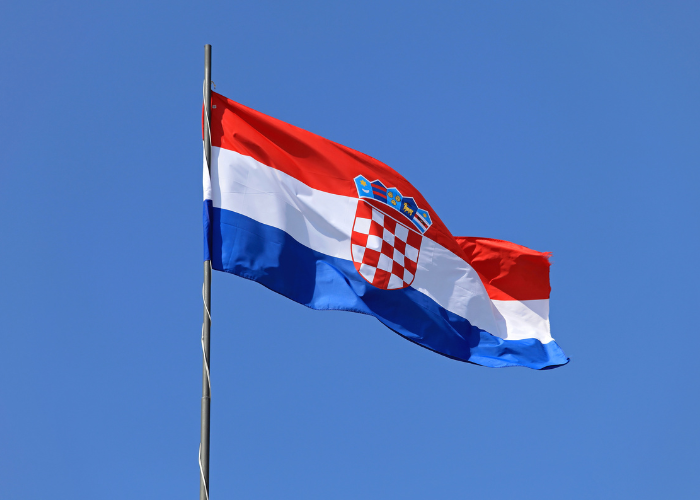
The e-invoicing in Croatia will be mandatory in the B2B sector starting in 2026. For Spanish companies operating in the Balkan country, this transition means adapting to a new legal and technological framework. This regulation seeks to simplify processes, improve traceability, and strengthen the fight against tax fraud. In this article, we will examine in detail what changes this law brings, how the new tax system will work, what timeline and deadlines the Croatian government has set, and how you must adapt to the requirements of these e-invoices.
Legal Framework for e-invoicing in Croatia
E-invoicing is expanding globally. Croatia is proof of this, as it is also joining the countries implementing it. In fact, this legal innovation is part of the European Digital VAT Directive (ViDA) and its objective to harmonize online invoicing throughout the European Union.
Main Objectives:
This directive was created with the aim of offering and contributing the following to the entire business fabric:
- Tax transparency by reducing VAT fraud.
- Business digitalization through the automation of invoicing in different countries.
- European harmonization, uniting criteria and principles among European nations (Germany, Portugal, Italy, France or Poland…).
- Administrative efficiency, as it streamlines payments and improves the traceability of operations.
In practice, all companies will have to issue all their B2B invoices through a system controlled by the Croatian tax administration.
The e-invoicing law in Croatia
More specifically, the Croatian government establishes this mandate for e-invoicing in B2B transactions starting in 2026. Furthermore, the key points of this new law are:
- E-invoicing will be mandatory in all national B2B transactions.
- The new regulation will also apply to foreign companies registered for VAT purposes in Croatia.
- Invoices must be transmitted through a state-centralized platform.
- Accepted formats must be structured (XML or UBL), ensuring automated document reading.
- PDFs and scanned documents will not be accepted as valid.
Implementation Schedule: When Does It Come Into Force?
Following approval, the question arises for businesses working with Croatian companies and entities: when does this new regulation come into force? The transition to electronic invoicing in Croatia will follow a progressive timeline which will presumably be as follows:
Thus, if a Spanish company issues invoices to a Croatian company, business, or institution, from 2026 it will be obliged to register them in the central system before sending them to the client.
How will its fiscalization system work?
In turn, the project is officially named the Electronic Invoice Fiscalization Project and aims to achieve real-time control of all operations.
Step-by-step operation:
- The issuing company generates the invoice in a structured format..
- It is automatically sent to the central system of the Croatian tax agency.
- The system validates the invoice (tax data, format, numbering, etcetera).
- Once validated, the invoice is forwarded to the recipient.
- Both parties have the invoice legally registered on the platform.
This mechanism, called Fina, is similar to the Italian SdI or the Polish KSeF, for example. All of them make it easier for companies to adapt their processes, leveraging prior experiences in other European countries.
Invoice format in Croatia
On the other hand, although we have already mentioned the topic of formats, let’s delve into it. The Croatian e-invoice will follow a European standard aligned with EN 16931. Therefore, it ensures interoperability between EU companies.
In this regard, the document must comply with several technical characteristics to be legal:
- Structured XML/UBL format.
- Mandatory fields: Issuer and recipient NIF (Tax Identification Number), issue date, invoice number, details of goods/services, VAT type.
- Digital signature. It is mandatory to guarantee the authenticity of the documents.
- Secure transmission. Each invoice must be registered in the government’s centralized platform.
So, for example, a Spanish software company that invoices licenses to a Croatian client is obliged to generate an XML invoice with all the required tax fields and send it to the Croatian system before its acceptance by the client.
Comparison with other European models
As we mentioned in the introduction, Croatia is yet another country joining electronic invoicing in Europe. However, others have already made this leap, albeit with differences among them, as shown in this table:
Croatia thus joins the growing trend of mandatory electronic invoicing in Europe.
Challenges and opportunities for Spanish companies
In practical terms, this legislative advance creates a new scenario for Spanish companies and businesses working with companies from the Balkan country. A landscape that presents both challenges and opportunities.
Challenges:
- Adapt invoicing systems to issue valid electronic invoices in Croatia.
- Ensure integration with the accounting and ERP software they already use.
- Comply with deadlines and requirements technical requirements of the Croatian tax authority.
Opportunities:
- There will be fewer errors and duplicates in invoicing.
- Processes will be automated that until now consumed time and resources.
- Gain in operational efficiency.
- Improve internal control and financial reporting.
- Access a more digitized and transparent market.
Therefore, it is a crucial moment for CFOs. Primarily, because they will be responsible for leading and managing this change. To do so, they must:
- Analyze their invoicing volumes in Croatia.
- Contact software providers (like easyap) to ensure compatibility.
- Participate in pilot testing programs already planned for 2025.
- Train their accounting and finance teams in the new processes.
- Plan the integration with other European countries that already have similar obligations.
Is easyap a strategic partner for electronic invoicing in Croatia?
What is clear is that adapting to electronic invoicing in Croatia requires software that complies with the new technical and legal requirements. Not only that, but it will also need to integrate with existing accounting systems.
This is where easyap, the invoicing solution with which Spanish companies can:
- Automate the issuance of their B2B invoices to Croatia.
- Integrate processes with other European countries with similar requirements.
- Enjoy specialized support in taxation and international invoicing.
- Reduce implementation costs and risks of regulatory non-compliance.
Ultimately, e-invoicing in Croatia is another milestone in the country’s digital transformation and an opportunity for Spanish companies to improve their international financial management. Here, solutions like easyap are strategic allies for seamless compliance with regulations. Contact us and we will help you efficiently manage your invoicing in Croatia and throughout Europe.


