Invoice numbering is a “three-in-one”: a legal requirement, an internal control mechanism, and an indispensable practice for a business’s financial traceability. Incorrectly numbering invoices can lead to penalties from the Tax Agency, accounting errors, and audit complications. In these lines, we explain how to number invoices, what the regulation in Spain requires and when it is mandatory to use different series. We’ll show you with examples and demonstrate how with easyap you automate accounting, save money, and avoid risks.
What is invoice numbering and why is it so important?
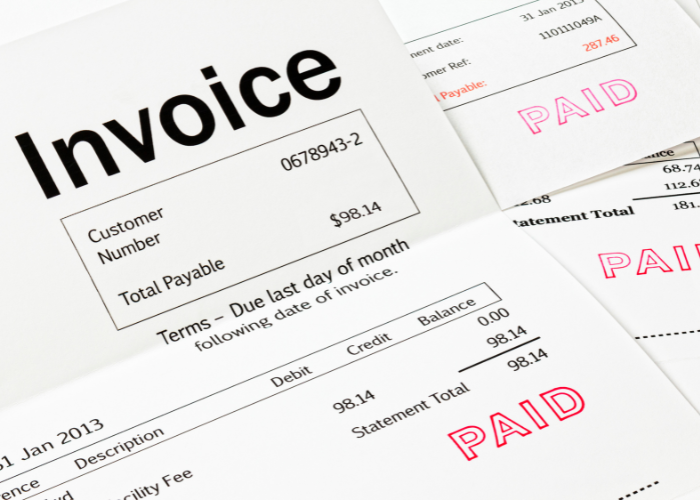
First, it’s important to understand the concept: invoice numbering is the unique, correlative, and ordered sequence assigned to each invoice issued by a company. Furthermore, it is much more than a simple internal organization code, as:
- It has legal and tax validity. Regulations require all invoices to have a unique identifying number.
- Ensures traceability. It allows you to follow the cycle of an operation from beginning to end.
- Prevents duplicates. A repeated number can invalidate an invoice or lead to penalties.
- Facilitates accounting and auditing. An ordered sequence simplifies the review of accounting ledgers and financial reports.
In short, numbering not only organizes but also protects the company from the Tax Agency and ensures your financial management is transparent.
What does the Invoicing Regulation say about how to number invoices?
Legally, the invoicing regulation (officially named Royal Decree 1619/2012, of November 30) clearly establishes how invoices must be numbered in Spain. Specifically, it states the following:
- Numbering must be correlative within each series.
- Each invoice must have a unique number that identifies it.
- You can create several invoicing series, but each of them must be correlative within itself.
- The numbering format is flexible: it can be just a number (001, 002, 003…), or combine numbers and letters (2025-001, A-2025-015…).
- It is mandatory for the numbering to be uninterrupted, unless you change series with a valid legal justification.
In other words, you cannot ‘skip’ numbers, repeat them, or arbitrarily reset the numbering.
When should you use different invoicing series?
Nevertheless, the regulations themselves foresee that in certain situations it may be necessary or advisable to use differentiated numbering series. Some common cases are:
- When issuing corrective invoices. In this case, they must have a specific series that is different from the general one.
- When a company has several establishments or branches. Here, each center can maintain its own series, provided it is consecutive.
- Invoicing in different fiscal years. Although it is not mandatory, many companies reset the numbering each year with a new series (for example: 2024-001, 2025-001).
- Companies with various types of operations. Some companies invoice under different regimes (general, equivalence surcharge, reverse charge mechanism…), so they often differentiate their series.
- With clients or for special projects. Some companies prefer to create specific series to quickly identify invoicing by client, by project, or by business line.
How to number invoices to avoid errors
As everything is better understood with practical examples, below we show you how to correctly number invoices in different scenarios:
In all these cases, avoid common errors such as:
- Restarting numbering within the same year without legal reason.
- Duplicating numbers on different invoices.
- Skipping numbers (for example, going from 2025-010 to 2025-012 without issuing 2025-011).
Example of how to number invoices correctly step-by-step
Imagine your company issues invoices in 2025, and there are three distinct scenarios: general invoicing, corrective invoices, and a new center you’ve opened in Barcelona. Let’s see how the correct numbering should be in each case:
1. General invoicing (annual series per fiscal year)
The usual practice is to create a series that restarts every year and follows a correlative order. That is:
- 2025-001
- 2025-002
- 2025-003
- 2025-004
Each new invoice increments the previous number by one. There are no skips or duplicates. Furthermore, when changing fiscal years, you would restart from 2026-001.
2. Corrective invoices (independent series)
If you want to correct an already issued invoice, regulations require it to be issued with a different series. That is:
- R-2025-001
- R-2025-002
Here, the “R” indicates that it is a corrective invoice. This series must also be correlative and cannot be mixed with the general series.
3. Multiple billing centers (series per location)
If you open a new center in Barcelona and bill from there, you have to create a series for that location. For example:
- MAD-2025-001 (Madrid)
- MAD-2025-002
- BCN-2025-001 (Barcelona)
- BCN-2025-002
Each location has its own independent and correlative sequence. This way, you have better accounting traceability and simplify audit processes.
Comparison: how easyap manages numbering versus competitors
Precisely, technology plays a vital role when numbering invoices. Software like easyap’s offers you essential advantages and functionalities, compared to other competitors:
Therefore, easyap is ideal for:
- Medium or large companies with high volume. Ensures traceability, internal control, and regulatory compliance.
- Environments with Corporate ERPs. The solution is perfect if you want advanced integration with SAP, Oracle, Dynamics, or the ERP you use.
- Organizations with international operations. The platform manages different foreign formats and regulations, which is vital for multinational companies.
- Financial departments with frequent audits. Automation and digital records facilitate any internal or external control.
However, for very small SMEs or freelancers who issue few invoices per month, a lighter tool might be sufficient.
Advantages of numbering invoices with easyap
Both for operational and legal reasons, in the day-to-day of a financial department or area, numbering invoices is critical. An error can lead to redoing work, facing penalties, delaying audits, or undermining customer trust.
That’s why more and more companies rely on systems like easyap, which combines automation, security, and legal compliance. Among the advantages you can leverage with our software, you will find:
- Total automation.Invoices are numbered automatically, without duplicates or gaps.
- Regulatory compliance.We comply with Spanish invoicing regulations and other international standards.
- Flexible configuration.You can create multiple series and sub-series by year, branch, client, or operation, without inconsistencies.
- Scalability.It doesn’t matter if you manage 500 or 500,000 invoices per month, as the system handles immense data volumes without losing an ounce of efficiency.
- Traceability and simplified auditing.Each invoice is registered with a unique number and is easily accessible for inspections or reviews.
- Time and cost savings.The financial team can focus on higher value-added tasks, instead of manually reviewing invoicing sequences.
- Expert support.At easyap, we have specialists in e-invoicing and legal compliance who support you with every update.
In summary, knowing how to correctly number invoices provides you with order, legal compliance, and efficiency.In large companies, the risk of invoicing errors multiplies. This is where easyap makes a difference: it integrates numbering into an automated, reliable, approved, and adaptable system. Want to see it? Contact us and enjoy efficiency, traceability, and control when managing your invoices.


